
January Tech Tip: Environmental Factors That Affect Aerial Lift Operation
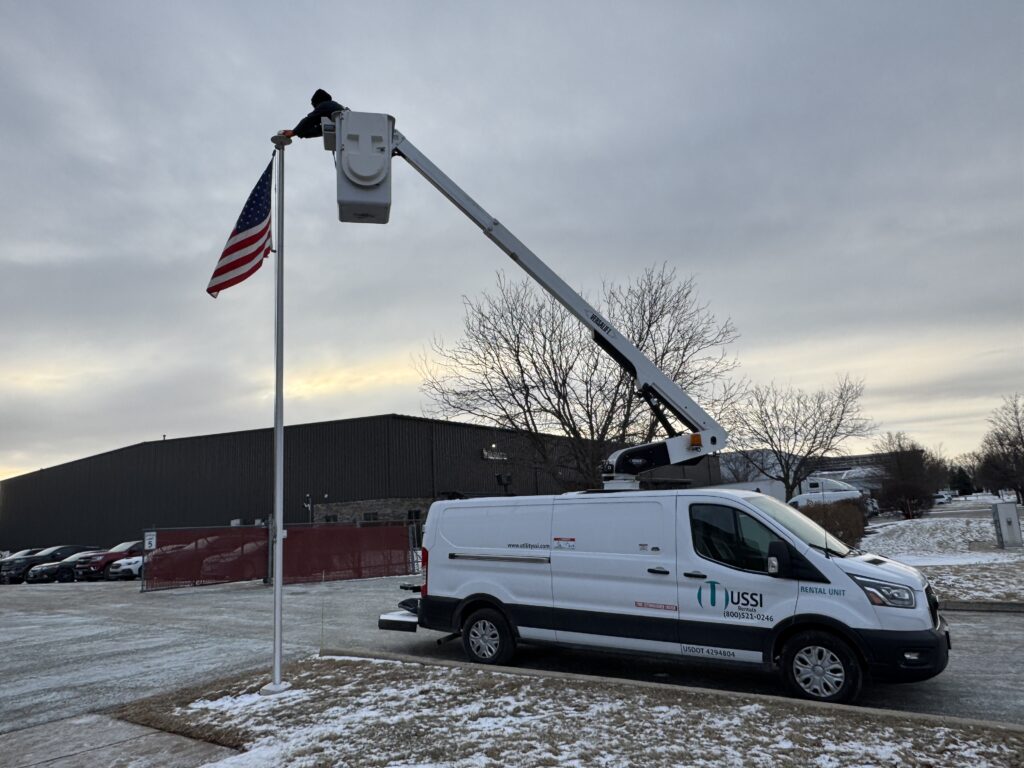
This month’s technical bulletin addresses critical—but often overlooked—environmental conditions that affect the safe operation of aerial lifts. These reminders are especially important as we head into colder weather.
When operating an aerial lift, several key questions must be answered:
- Are the outriggers (stabilizers) set firmly?
- Is the platform’s rated capacity being respected?
- Is the Minimum Approach Distance from energized lines being observed?
Even trained and experienced operators sometimes overlook one vital responsibility: reading the Operator’s Manual.
The Operator’s Manual—required to be kept on the vehicle at all times—identifies hazards that can affect the unit’s safety, including environmental factors.
Temperature
Each manufacturer defines the safe ambient temperature range in the Operator’s Manual. For example, Versalift units are rated for operation between -40°F and 125°F. Even if your region never reaches these extremes, temperatures near freezing (32°F) can still cause performance issues.
As the temperature drops, hydraulic fluid can thicken, making the controls feel sluggish. Running the unit with the PTO and hydraulic pump engaged helps circulate and warm the oil, improving responsiveness.
Wind
Versalift and Elliott lifts must not be operated if wind gusts exceed 30 mph. Gusts—not sustained winds—set the operational threshold. Even if the steady wind is below 30 mph, a brief gust beyond that limit can create unsafe conditions.
Many weather apps provide hourly gust forecasts. If your unit is not a Versalift or Elliott, refer to your Operator’s Manual for the correct wind speed limits.
Electrical Storms
Do not operate any aerial lift during an electrical storm or if one is nearby. Contact your manufacturer or USSI’s Service Department for specific guidance.
Ground Conditions
Environmental safety doesn’t stop with weather. Ground conditions are just as important.
Aerial lifts are generally rated for operation on slopes between 0° and 5°. The flatter, the better. The steeper the slope, the more stress on the lift—and the less stable the operation.
If a unit is parked even partially on loose or unstable ground, rotational movement may shift excess weight to the unstable side, pushing the lift beyond its rated slope limits.
In wet or off-road conditions, use cribbing to improve footing and reduce the risk of shifting.
Final Note
Many other mechanical and environmental factors can impact lift safety. Reading and understanding the Operator’s Manual and reviewing Section 10 of ANSI A92.2 (Responsibilities of Operators) are essential for making qualified, safe decisions.
If you have questions about operator responsibilities, training, or your specific equipment, contact USSI:
Wisconsin / Michigan: (888) 999-8090
Illinois / Chicagoland: (800) 521-0246
Or visit our Service Department