
Checking & Replacing Critical Fasteners on Aerial Equipment
What is a “critical fastener”?
A critical fastener is any fastener that is structural or retains a structural member of an aerial lift. They are typically identified in a diagram in the equipment’s maintenance manual. Common critical fasteners include (but are not limited to) shear plate, machine mount, rotation bearing, and gearbox mounting fasteners, as well as pin keepers/retainers, platform mounting, and basket rotator mounts. These are checked as part of ANSI A92.2’s Frequent Inspection and Test as well as the Periodic Inspection and Test.
Possible Causes of Loosening Critical Fasteners
Critical fasteners may loosen over time for a variety of reasons. The most common are worn threads, turning pin flanges, excessive vibration, or shock loading. Since fasteners are under constant tension, they may also stretch and/or deform over time. Loose critical fasteners must be replaced, when identified, with the same size, length, grade, and torque per the manufacturer’s specification, found in the equipment manual.
Identifying a Loose Critical Fastener
Some manufacturers utilize “Torque Seal” (a visual indicator applied to fasteners to detect loosening or tampering) to allow for a quick visual check. If the torque seal remains unbroken, the fastener is properly torqued. Some fasteners may have broken torque seal due to coming in contact with tree branches or from material the operator is loading into the platform. It is still important to check these fasteners and reapply torque seal if the torque has been unaffected.
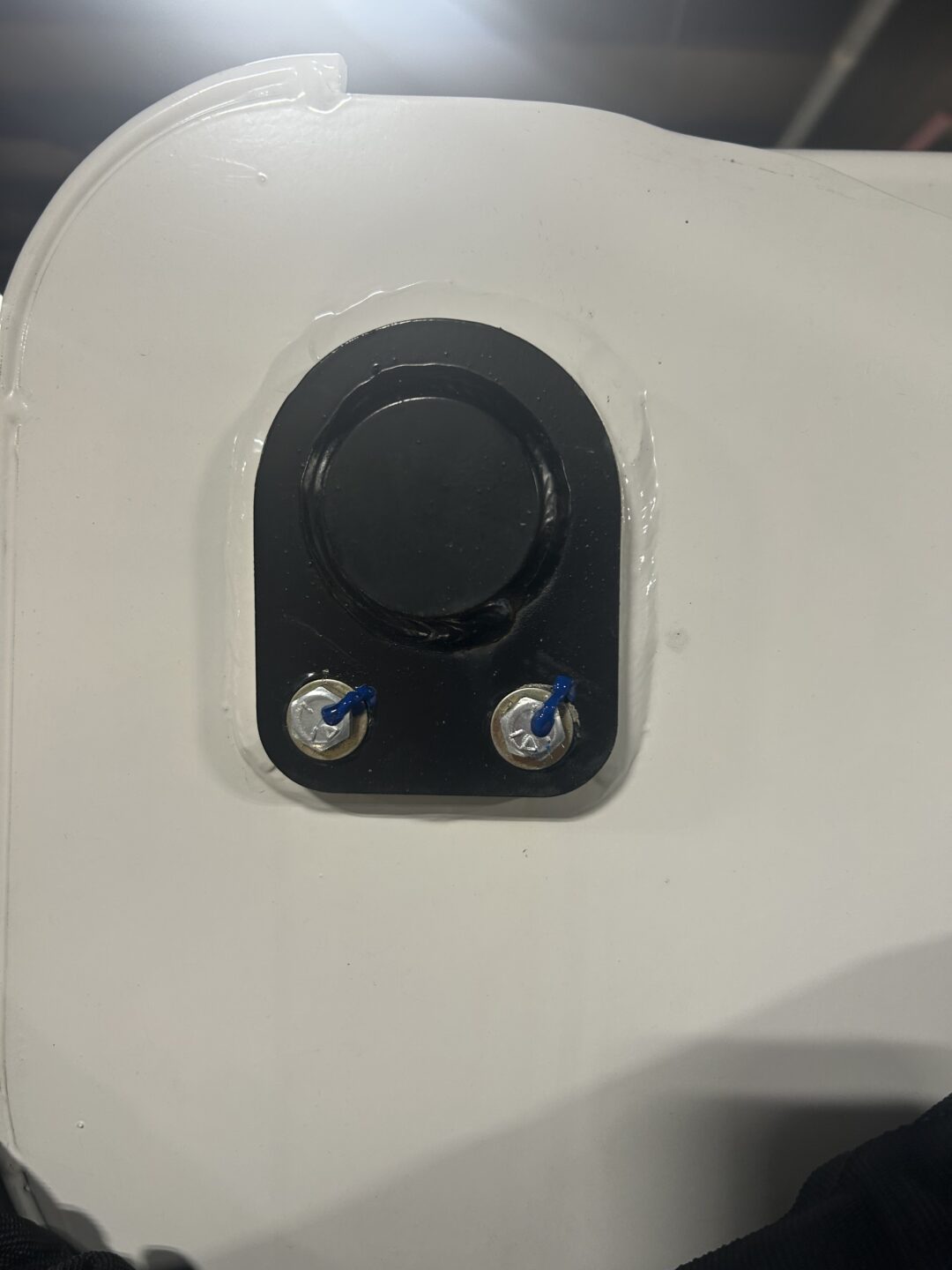
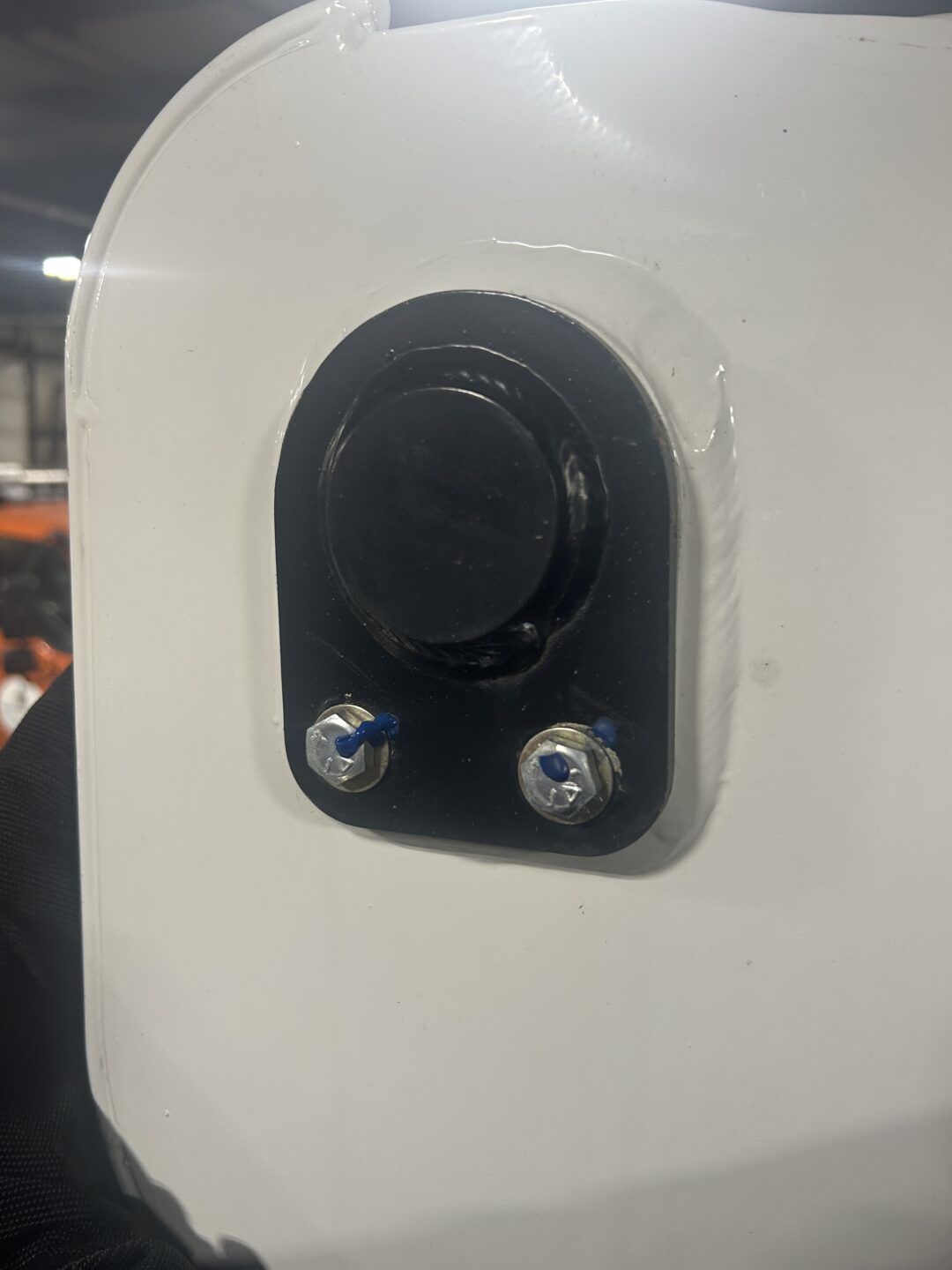
Methods for Identifying Loose Fasteners
Method 1: Tension Testing
Tension testing consists of tapping the head of a fastener with a ball peen hammer (using roughly the same force used to drive a nail) and listening to the impact sound. A sharp rebound with a clear “clang” indicates a tight fastener, while a dull “thud” with less rebound may indicate a loose fastener. This applies to several types of steel fasteners.
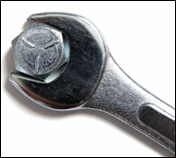
Method 2: Wrench Testing
Use the properly sized wrench and, with light force, attempt to turn the fastener clockwise. If the fastener does not turn, it has not lost its torque. It is not recommended to check torque in the counterclockwise direction, as a tight fastener may be accidentally loosened.
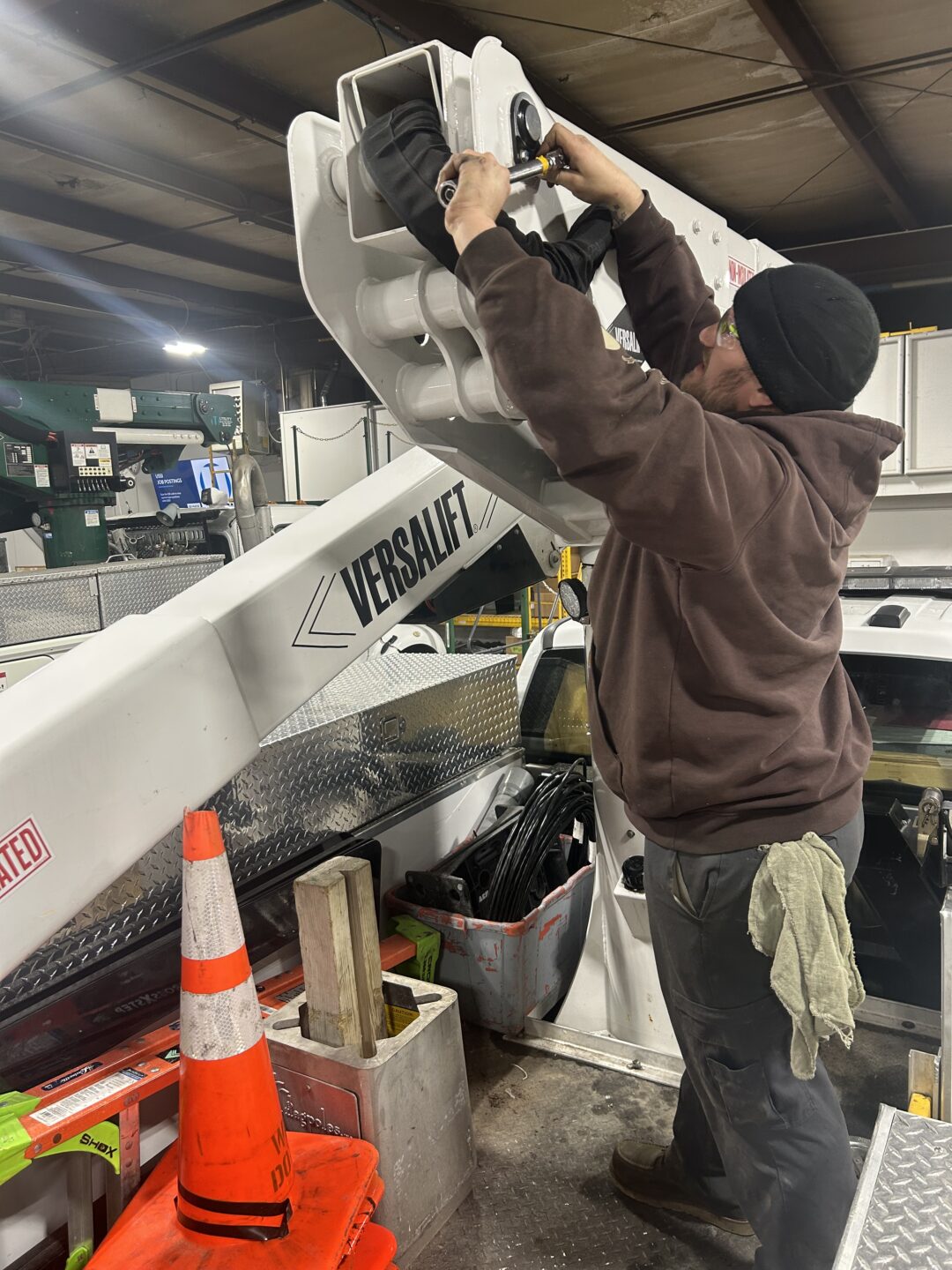
Method 3: Torque Checking
The most reliable way to ensure a critical fastener is properly torqued is by using a torque wrench. This requires the correct tool and knowledge of the fastener’s installation torque, which can be found in the unit’s manual. Check each critical fastener at 90% of the installation torque. If the fastener does not move, it remains within specification.
After Locating a Loose Critical Fastener
Loose critical fasteners should not be simply retightened—they must be replaced according to the manufacturer’s specifications before returning the unit to service. Ensure replacement hardware is the correct grade and style. Properly clean, prime, and apply the specified thread locker (“Loctite”), if required. Tighten to the manufacturer’s specified torque value and apply torque seal as needed.
Questions? We’re here when it counts.
Please contact USSI for further information:
Wisconsin/Michigan: (888) 999-8090
Illinois: (800) 521-0246